


The “Empress Theophano” Prize honoured EUROPA NOSTRA for the promotion and preservation of European cultural heritage
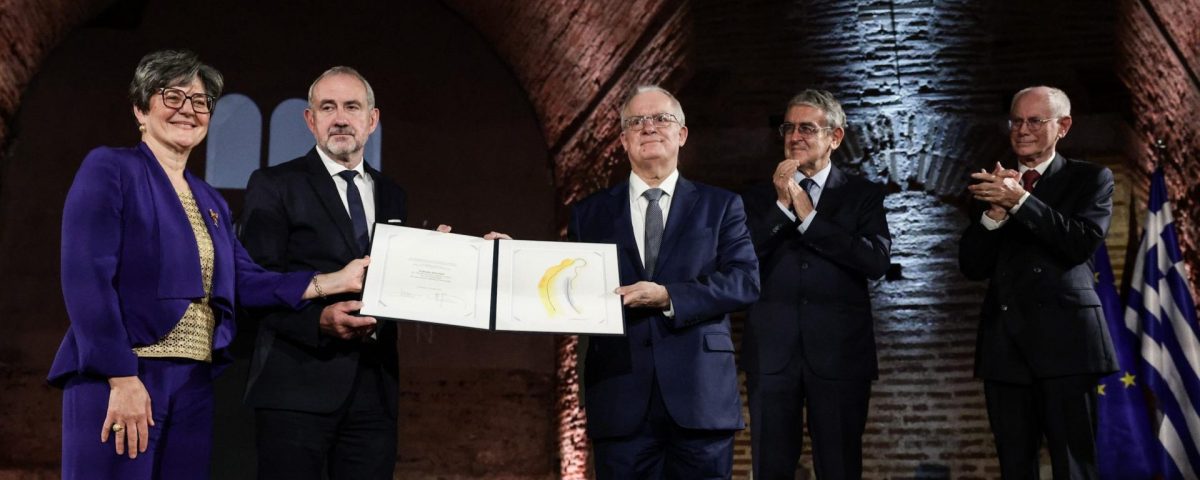
This year’s glorious Award Ceremony at the Rotunda monument, was a point of reference and a celebration of honour for the European cultural heritage.
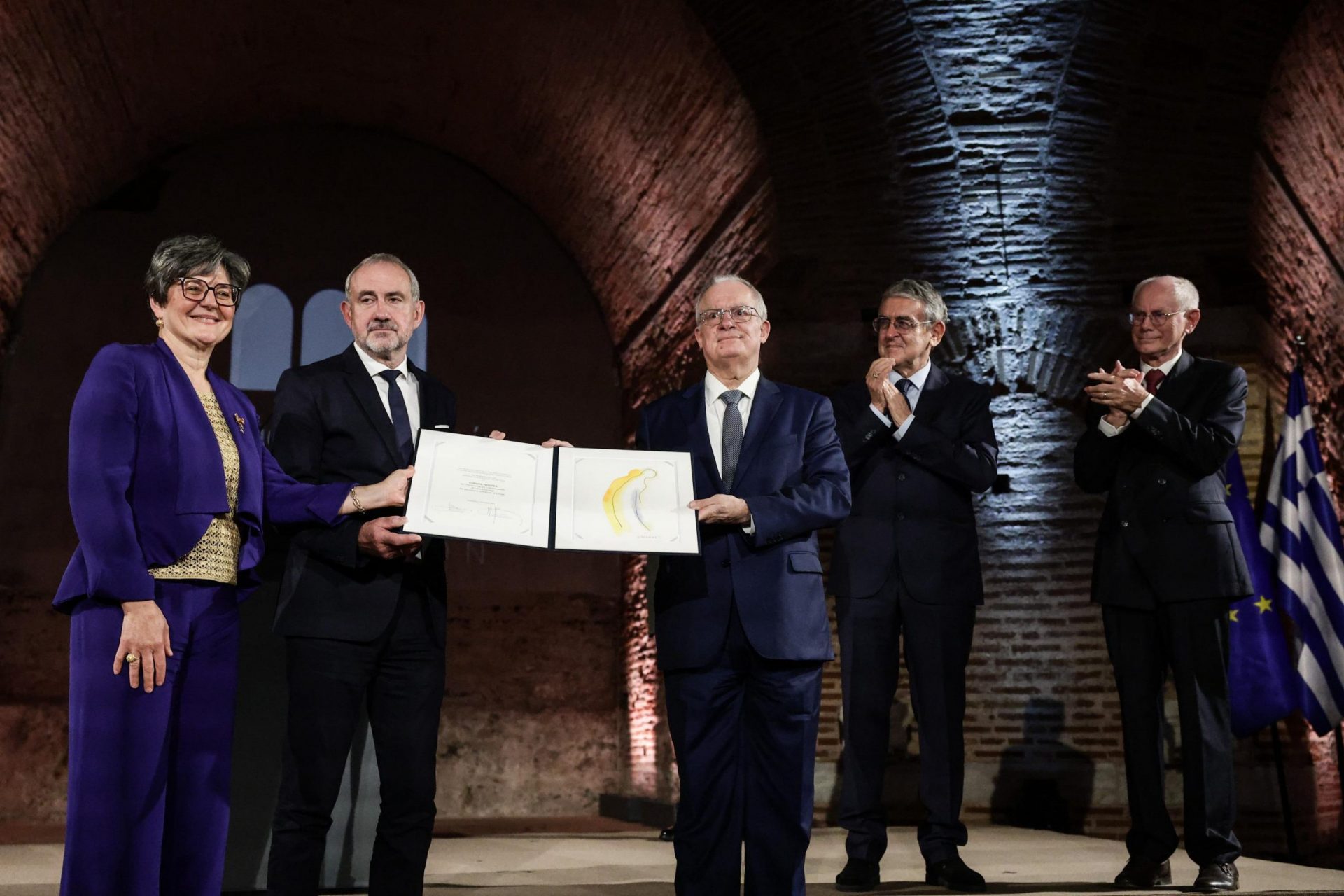
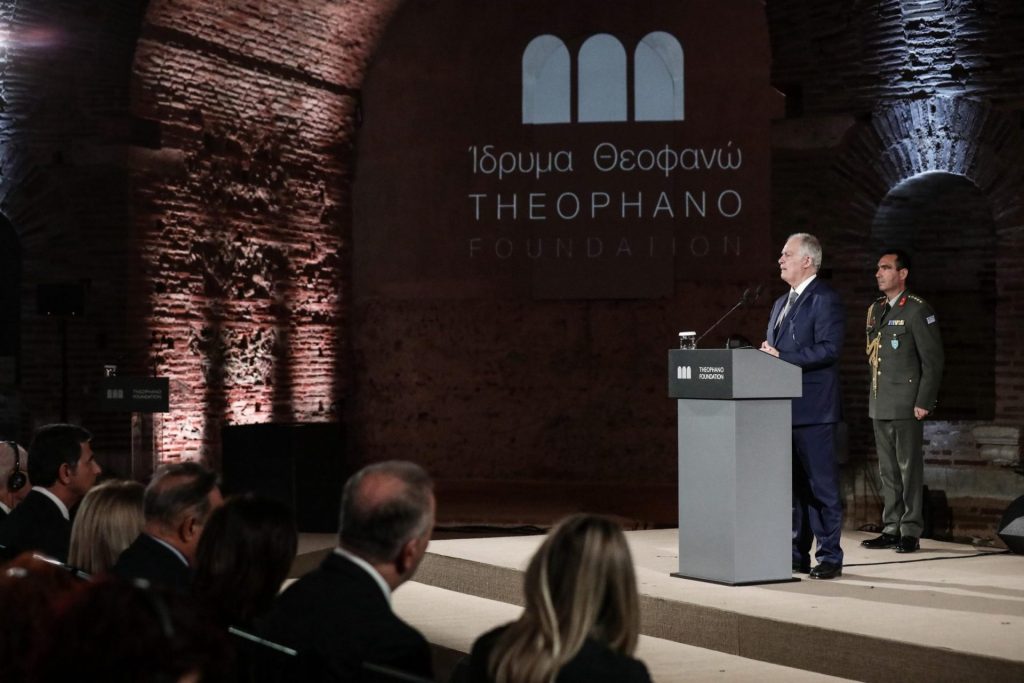
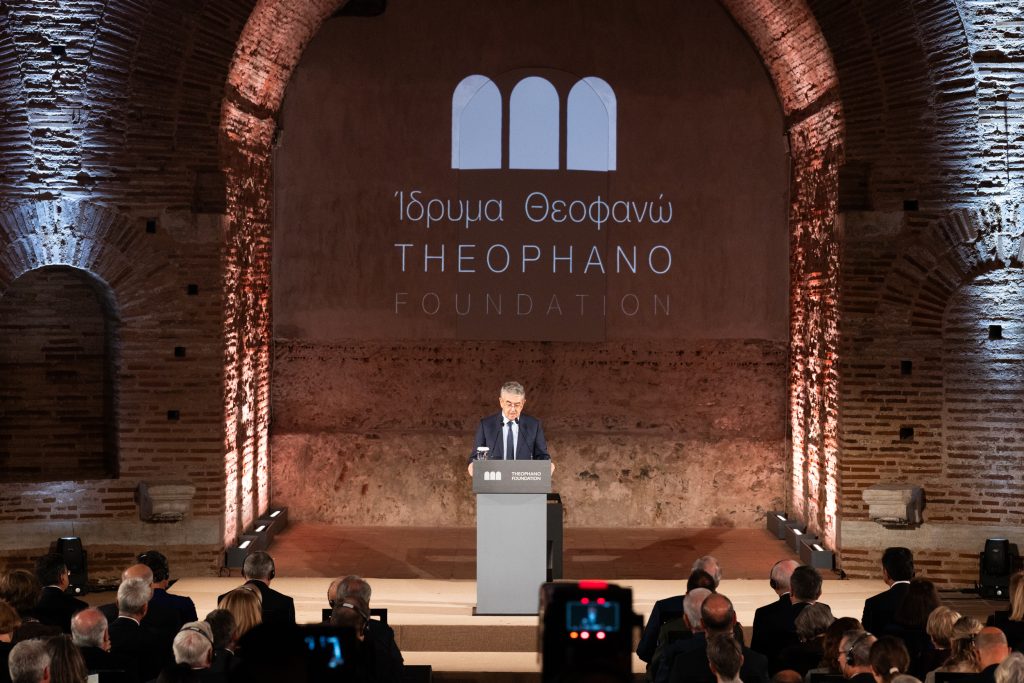
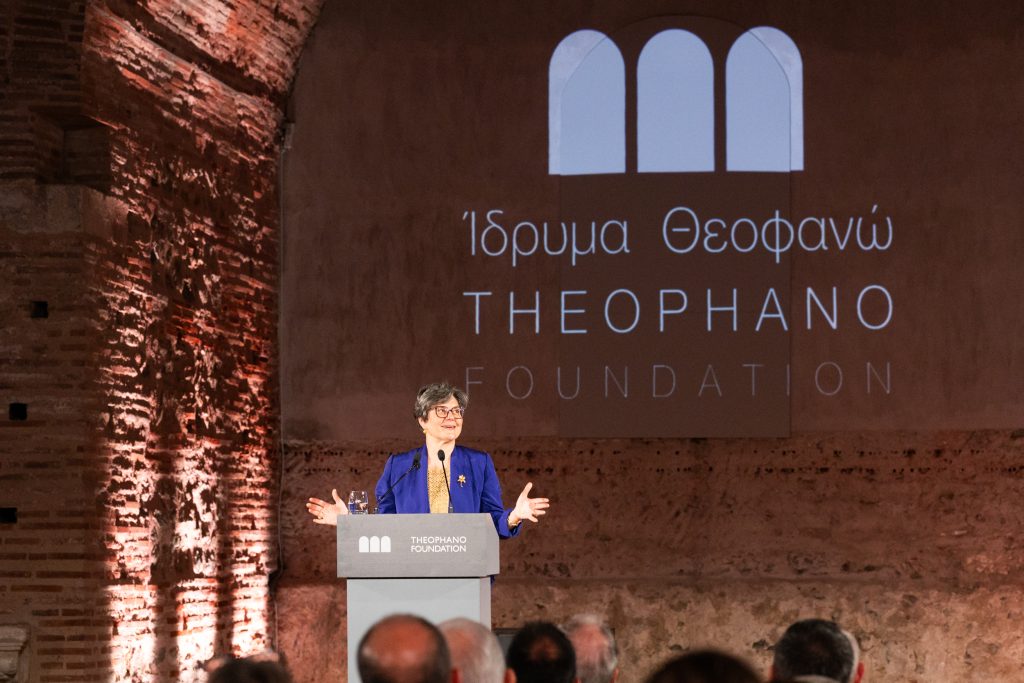
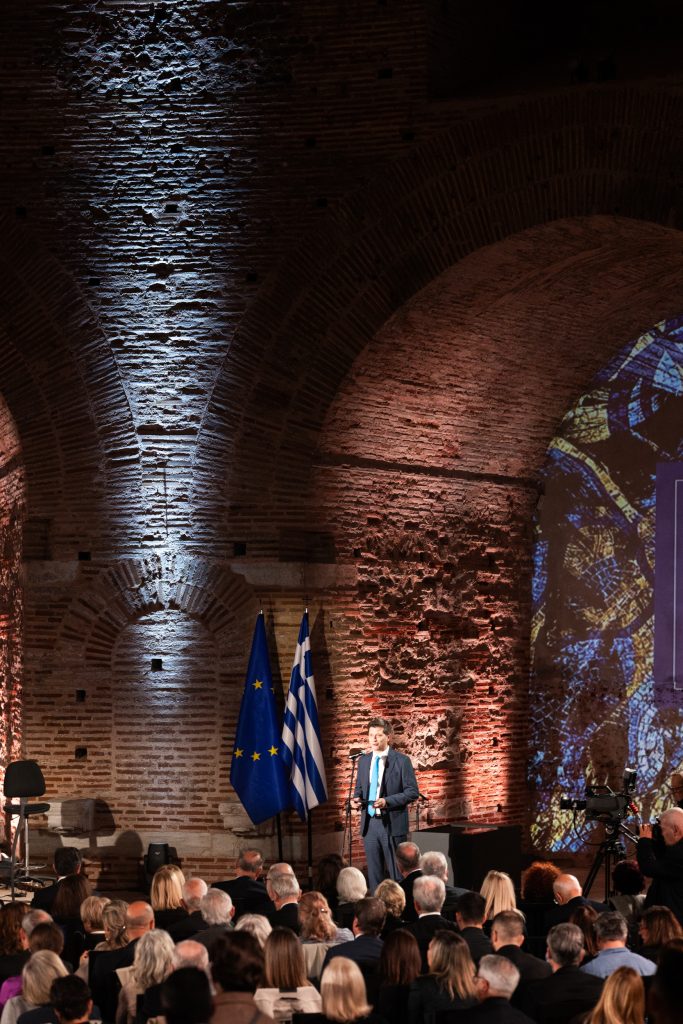
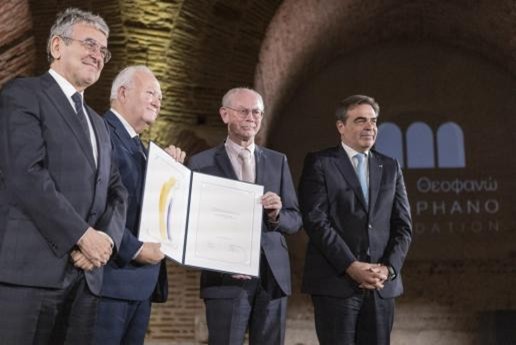
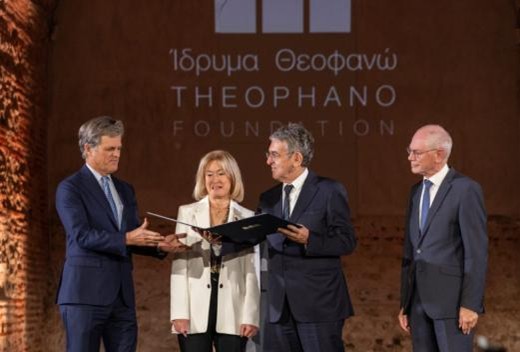
Thessaloniki, November 7, 2025. EUROPA NOSTRA, the leading pan-European organization dedicated to the protection and promotion of European cultural heritage, was awarded yesterday the 6th “Empress Theophano” Prize, in a magnificent ceremony held at the emblematic Rotunda Monument, in the presence of leading personalities from around the world. The award was presented by H.E. the President of the Hellenic Republic Mr. Constantine An. Tassoulas, to the Executive President of EUROPA NOSTRA, Professor Dr. Hermann Parzinger, and the Secretary General of the Organization, Sneška Quaedvlieg-Mihailović.
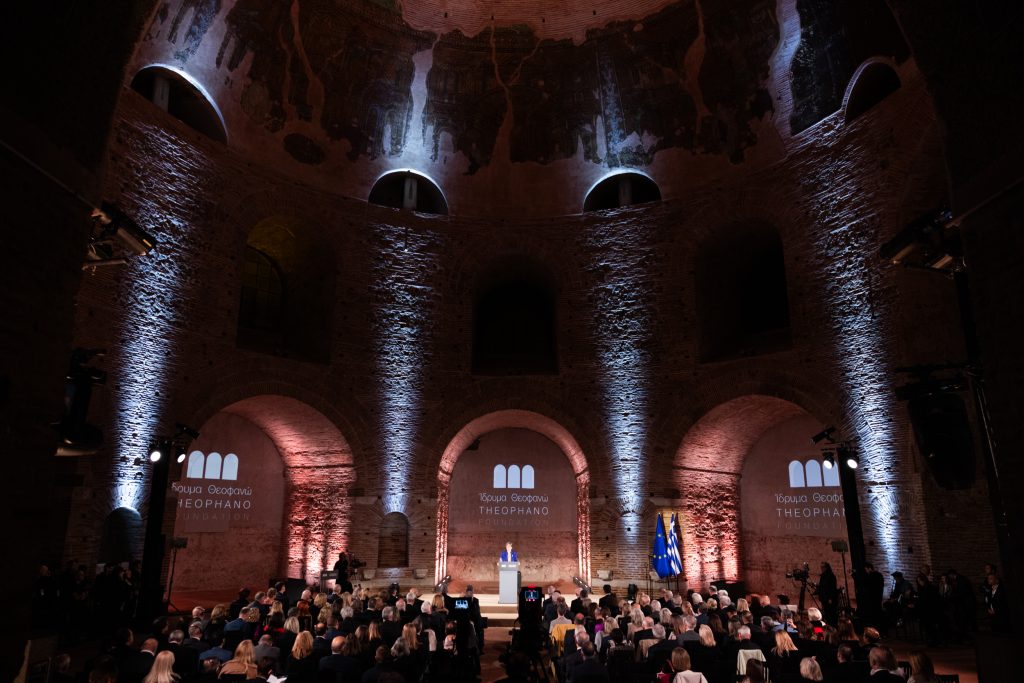
During his opening address, the President of the Hellenic Republic, Mr. Constantine An. Tassoulas underlined that the values of democracy, solidarity, and, most importantly, dialogue and creative interaction of cultures make Europe unique. These values are the tools to respond to modern challenges and fulfill its historic mission, with Greece playing a central role as the starting point of the European Idea. “In this era, bridges of dialogue, cooperation and unity are essential, that transcend contradictions and prove that the ties that unite people, peoples and countries outweigh the differences that separate them. This is after all the goal of the “Empress Theophano” Prize, “noted Mr. Tassoulas praising the work of EUROPA NOSTRA for the advocacy of European cultural heritage, the strengthening of education and the promotion of sustainable development through cooperation, the preservation of diversity and the strengthening of social cohesion in Europe.
In his welcome speech, the President of the Governing Council of the Theophano Foundation, Stavros Andreadis, referred to the important course of the Prize in the first six years of its history, and its importance for the future: “In a world of social and political challenges, in a world of contradictions that are considered irreconcilable and insurmountable, an idea was born. The idea of a prize aiming to highlight hope: the positive, common, European and universal values, as they are embodied through the action of individuals or organizations.” Mr. Andreadis thanked the leading personalities who have rallied all these years around the Prize and are the “common voice of Europe”, highlighting through the Prize humanity, solidarity, understanding, cohesion and reconciliation, bridging contradictions. Referring to Europa Nostra, “the voice of European civil society” for cultural heritage, he stressed that it is an initiative that for more than 60 years has been highlighting the importance of protecting and promoting European cultural heritage as a crucial pillar of unity, identity and sustainable development.
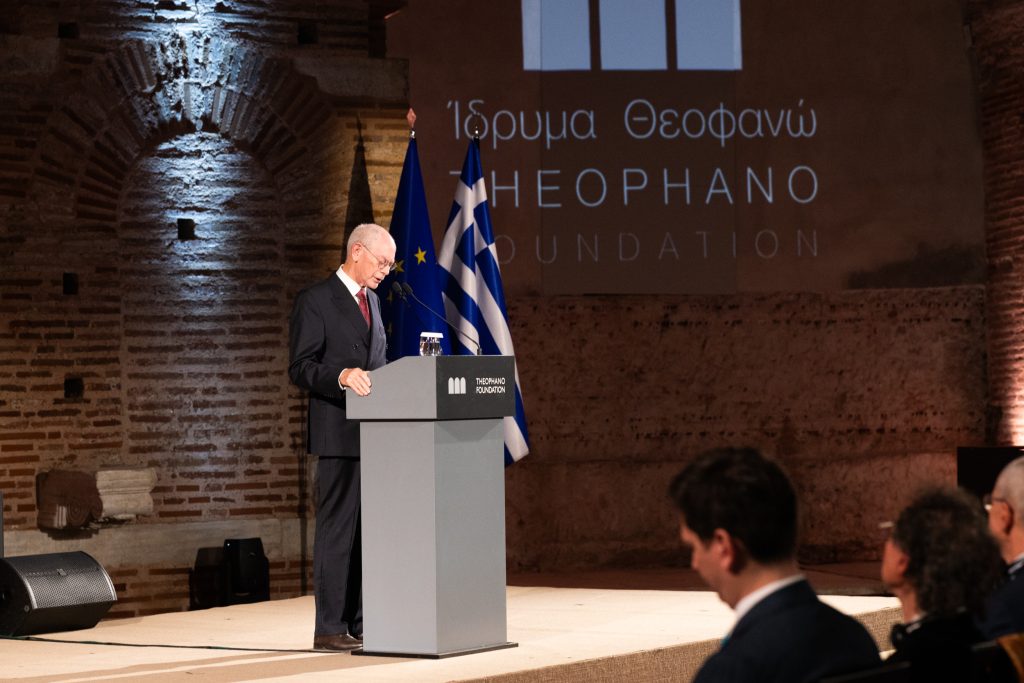
The mission of the Theophano Foundation is to embody the idea of reconciliation and connection, honouring people and organizations that serve this vision and are role models for the whole of Europe, underlined the President of the Foundation’s Advisory Council, Herman Count Van Rompuy. As he pointed out, the essence of European culture revolves around humanity or, as the Roman playwright Terentius once put it: “I am human, and nothing human is alien to me.” According to Mr. Van Rompuy, the “Empress Theophano” Prize stands out for its mission to honor those who advocate the values of cooperation by offering more humanity and hope to Europe and the world. EUROPA NOSTRA ideally embodies this spirit, as “it want to connect the old with the new. Nova et vetera.”, he stressed, adding that “tomorrow’s heritage is being created today. Without today’s initiatives, there will be no heritage tomorrow.” “We all need a “place” where we feel at home and at the same time we need a “space” to give us a broader perspective. Europe is that space. The combination of both gives the feeling that we are together in the same boat.,” he noted and recalled the need to preserve justice, freedom and peace, which is “our greatest monument “.
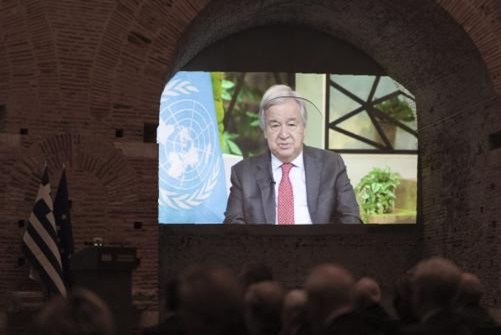
The President of the Organization and world-famous mezzo-soprano, Cecilia Bartoli, expressed her emotion for the award of the “Empress Theophano” Prize to EUROPA NOSTRA. In her brief message, Ms. Bartoli dedicated this important award to those who have been passionately serving the European cultural heritage for sixty years. Expressing her gratitude for their offer, she called for the continuation, “with the same enthusiasm, of their noble mission in the service of beauty, dialogue and harmony in our society.”
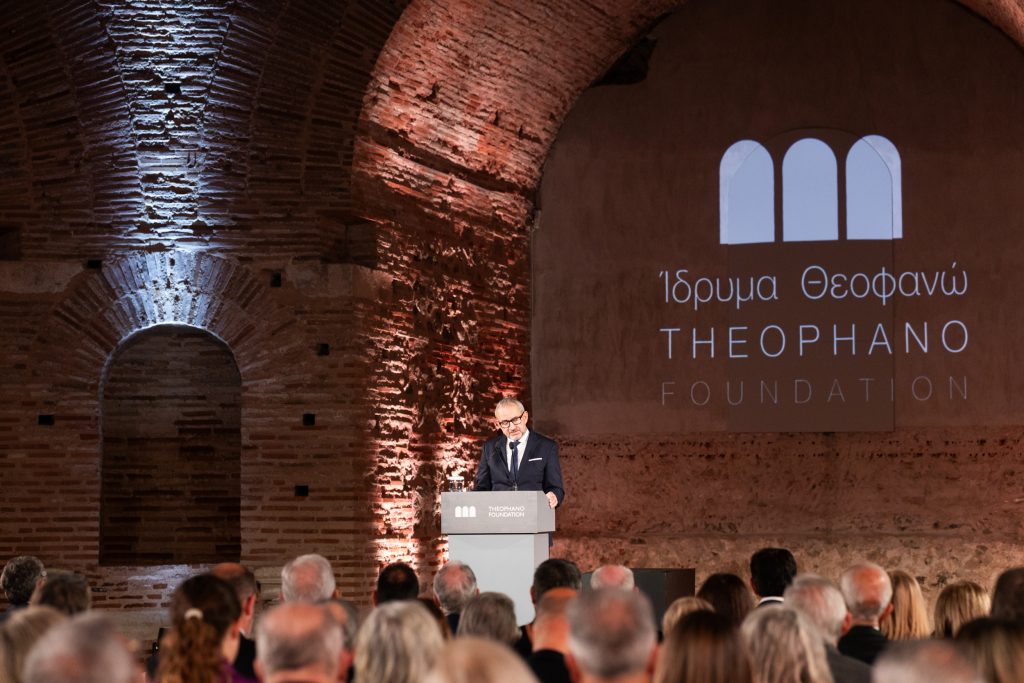
“Heritage is a living force, and heritage gives hope,” said the Executive President of EUROPA NOSTRA, Prof. Dr. Hermann Parzinger. As he mentioned, with this philosophy, EUROPA NOSTRA works to preserve the beauty and memory of Europe, through partnerships with EU institutions, the Council of Europe and numerous local initiatives. “When a community in Ukraine protects its monuments under bombardment; when a derelict industrial site in Portugal becomes a hub for innovation; when young people in the Balkans rediscover their shared cultural roots — we witness the quiet power of heritage to heal and to unite. Heritage is not about nostalgia. It is about belonging,” he noted. However, Dr. Parzinger reminded us that the European heritage is threatened by war, climate crisis, populism and indifference. “To lose our heritage is to lose our compass,” he stressed and pointed out that EUROPA NOSTRA’s goal is to stand as a guardian of memory, excellence and cultural democracy. In this context, he called for joint action for a “green and cultural transition”, pointing out that “heritage and democracy depend on each other”, adding that “a people that forgets its history can too easily forget its freedom“. Referring to Greece, he stressed that “To speak of Europe without speaking of Greece is to speak without a beginning.“
Having the privilege of leading the Organization for a quarter of a century, the General Secretary of Europa Nostra, Sneška Quaedvlieg-Mihailović, wanted to honour the memory of Empress Theophano – a personality who embodied the ideal of enlightened female leadership. Referring to her personal history during the war in Yugoslavia, Ms. Quaedvlieg-Mihailović spoke of the moment when, in despair and a sense of helplessness seeing the bombing of Dubrovnik – a city symbol of World Heritage – she met EUROPA NOSTRA. “I lost my native country, but through EUROPA NOSTRA I was lucky to find a new one, even bigger: Europe,” she said. She stressed that since then EUROPA NOSTRA’s mission has been an “antidote to the poison of nationalism and all forms of extremism“, offering hope for a common European identity at a time when Europe has to face both the demons of the past and new challenges. At the same time, she recalled the very motto of the European Union – “unity in diversity” (in varietate concordia) and underlined that EUROPA NOSTRA continues to consistently serve the values of culture, solidarity and European unity, highlighting and honoring the wealth of our common heritage.
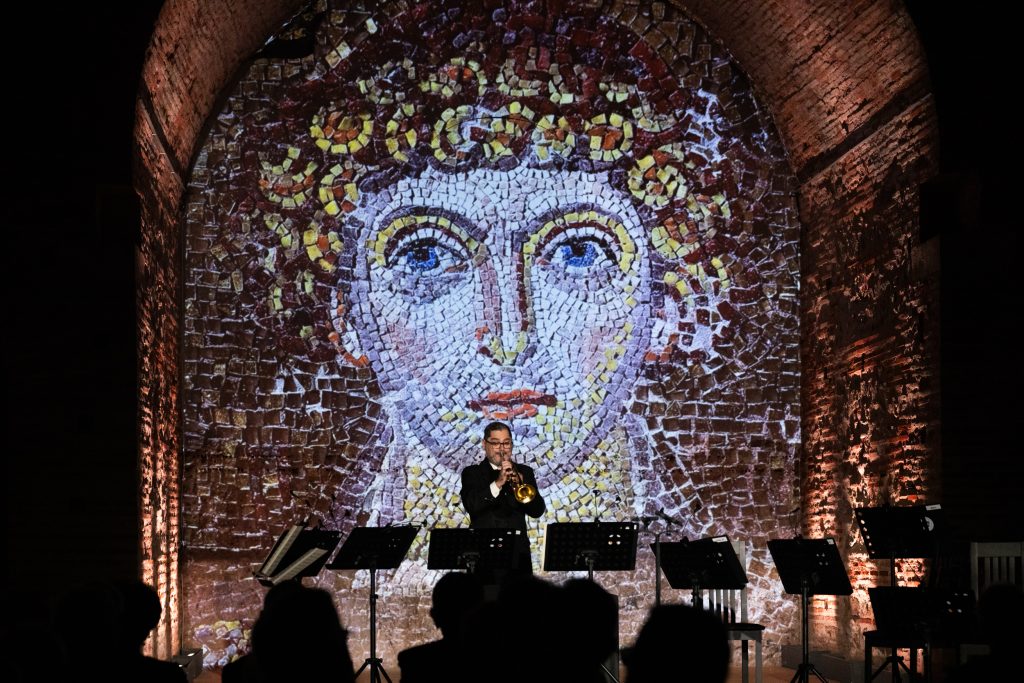
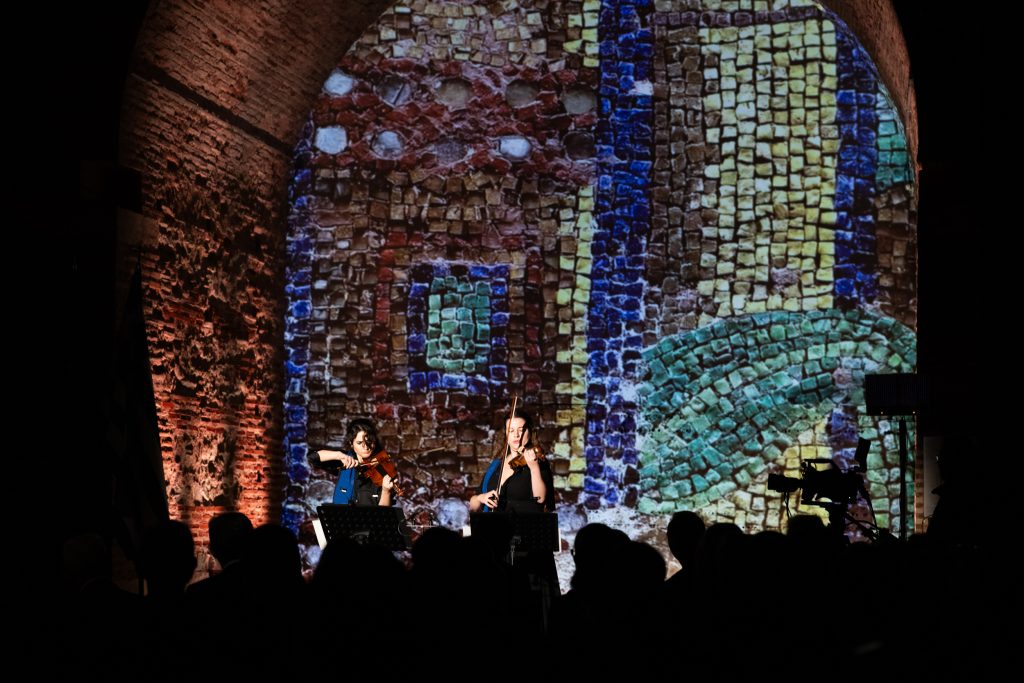
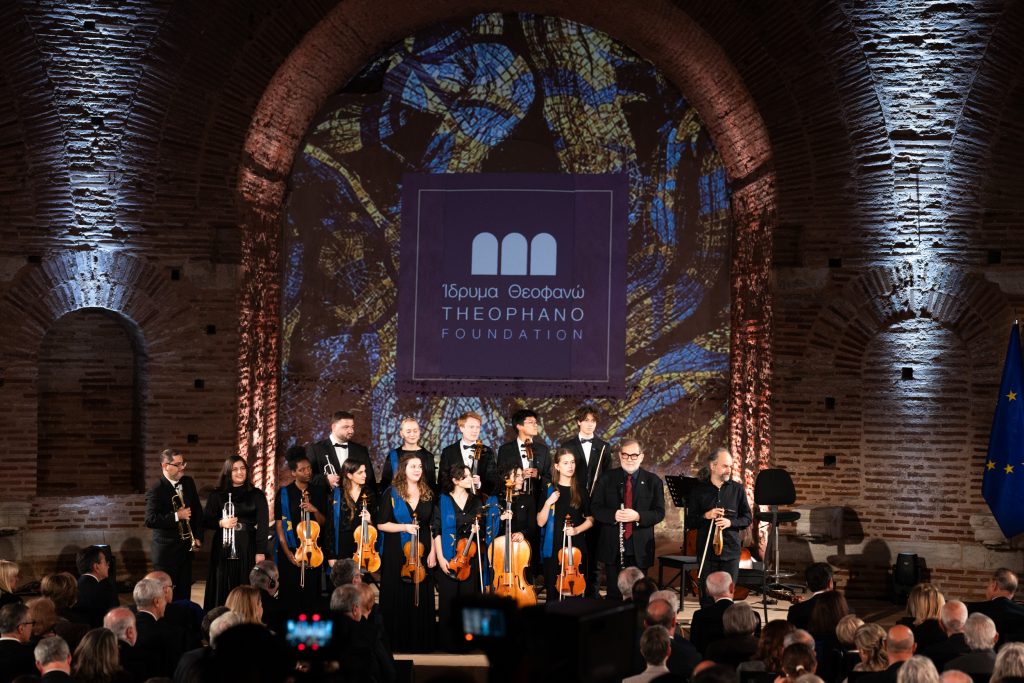
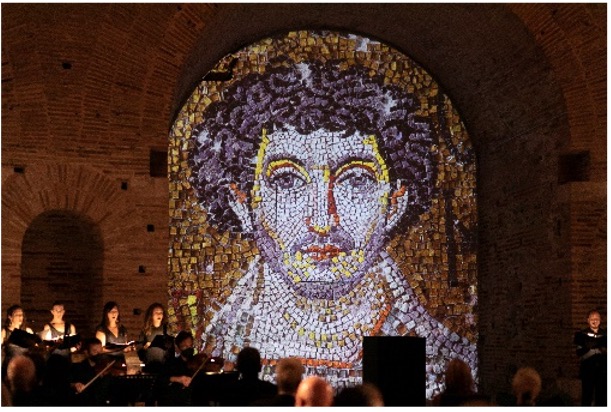
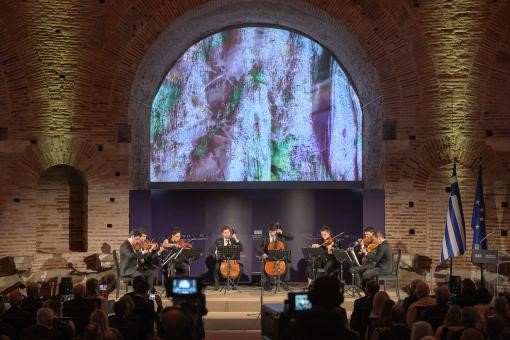
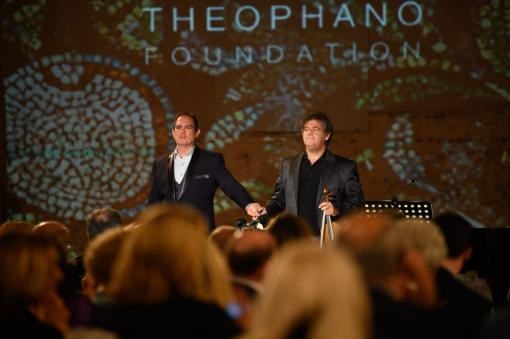
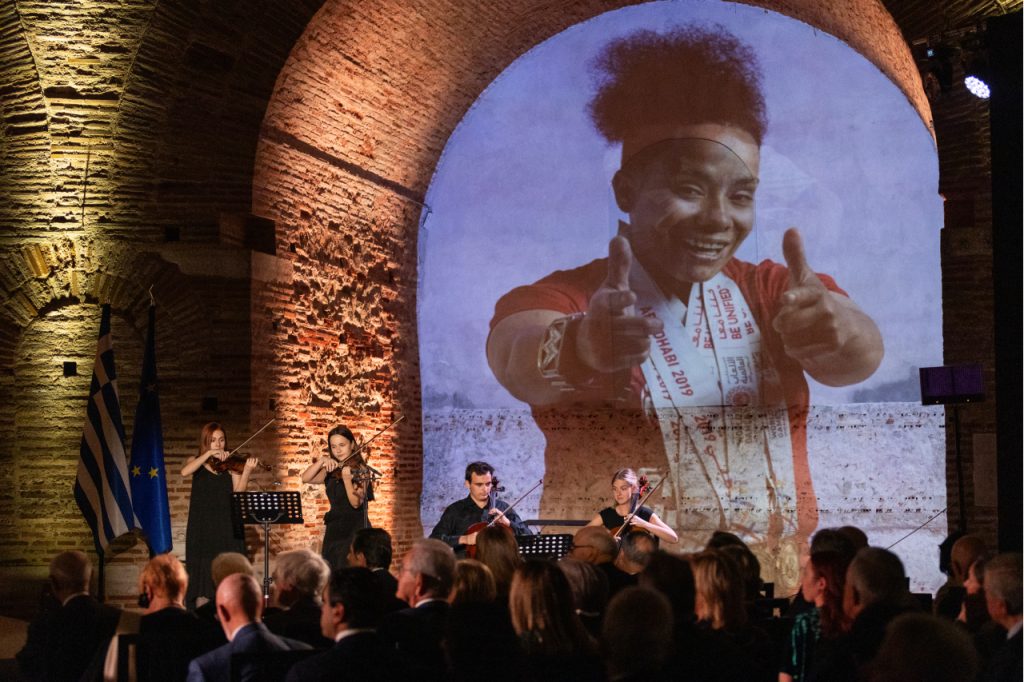
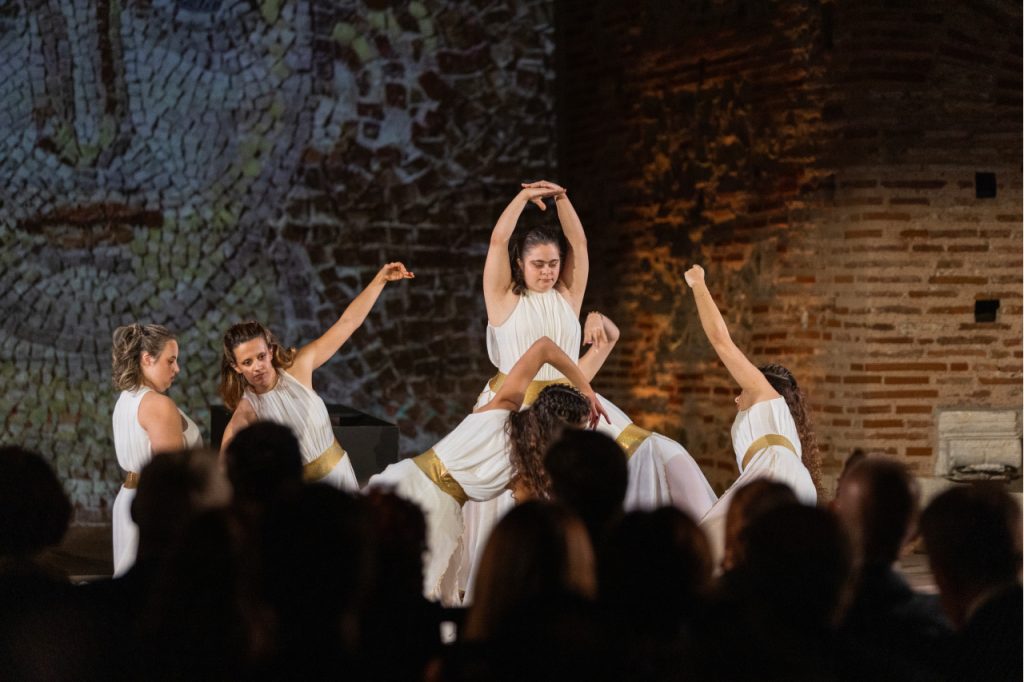
The event, presented by the ERT journalist Apostolos Mangiriadis, ended with a musical tribute to seven composers from an equal number of countries, performed by fifteen musicians from nine European countries, under the artistic supervision of the Director of the European Union Youth Orchestra, Marshall Marcus. The music program, framed by images and symbols that highlighted the Rotunda and elements of different European cultures, honored the diversity of European cultural heritage and the long course of EUROPA NOSTRA, and was proof that the musical and cultural palette of the European continent is inexhaustible.
The Award Ceremony was honoured with the presence of: fr. President of Finland Tarja Halonen, fr. Minister of Trade of Spain Maria Luisa Poncela, the Deputy Minister of Interior, Sector of Macedonia-Thrace, Konstantinos Gioulekas, the Regional Governor of Central Macedonia, Athina Aidona, the Mayor of Thessaloniki, Stelios Angeloudis, the Deputy Minister of Development, Stavros Kalafatis, the Deputy Minister of Labour and Social Security, Anna Efthymiou, the President of the Network for Reform in Greece and Europe and fr. Commissioner for Employment and Social Affairs of the European Union, Anna Diamantopoulou, and many others.
SPONSOR

OFFICIAL AIR CARRIER

WITH THE SUPPORT OF:


About Europa Nostra
Europa Nostra is the European voice of civil society committed to safeguarding and promoting cultural and natural heritage. It is a pan-European federation of heritage NGOs, supported by a wide network of public bodies, private companies and individuals, covering over 40 countries. It is the largest and the most representative heritage network in Europe, maintaining close relations with the European Union, the Council of Europe, UNESCO and other international bodies. Founded in 1963, Europa Nostra celebrated its 60th anniversary in 2023.
Europa Nostra campaigns to save Europe’s endangered monuments, sites and landscapes, in particular through the 7 Most Endangered Programme. It celebrates and disseminates excellence through the European Heritage Awards / Europa Nostra Awards. Europa Nostra actively contributes to the definition and implementation of European strategies and policies related to heritage, through a participatory dialogue with European Institutions and the coordination of the European Heritage Alliance.
Europa Nostra has led the European consortium selected by the European Commission to run the European Heritage Hub pilot project (2023-2025). It is also a partner of the New European Bauhaus initiative developed by the European Commission, and a leading European member and supporter of the Climate Heritage Network.
More information: www.europanostra.org

About the Theophano Foundation
The purpose of the Theophano Foundation, launched in 2019, is to promote those human values which characterise Europe and to honour exceptional examples of these values in action. In doing so, its aim is also to underline and build upon the powerful historical resonance of Eastern European culture in shaping and living these values, be it in statecraft, education, religious tolerance, scientific progress or artistic and sporting endeavour. www.theophano.eu
The Theophano Foundation
The Theophano Foundation awards the annual Empress Theophano Prize to individuals or organisations that have made an outstanding contribution to bridging divides between people, nations, ideologies, thereby enhancing understanding of Europe’s common values.
The Empress Theophano Prize is unique in its field
- Historical Resonance: The prize is named after Byzantine Empress Theophano, symbolising the fusion of Eastern and Western cultures. The award ceremony is held at the Rotunda in Thessaloniki, a monument reflecting Roman, Byzantine, Orthodox, Ottoman, and Greek influences.
- Thematic Diversity: Each year, the prize focuses on a different domain – such as education, science, arts, humanitarianism, sports or culture – to highlight different channels through which our common European values are expressed.
- Non-Pecuniary Recognition: Unlike many awards, the Empress Theophano Prize does not include a monetary component, emphasising honour and recognition over financial reward.
The Theophano Foundation’s unique blend of historical context, thematic versatility and symbolic recognition sets it apart in the landscape of European foundations. By honouring diverse contributions that foster unity and understanding, it plays a distinctive role in promoting the values that underpin European cohesion, essential in the current times of global dissonance and uncertainty.
Empress Theophano Prize | first five years
VIDEO material in LINK https://www.youtube.com/watch?v=NYRHiRonzqI
Media enquiries
Vicky Papadimitriou, Project Coordinator, Theophano Foundation: info@theophano.eu or +30 693 722 9858
Andrew Fielding, Senior Advisor, Theophano Foundation: andrew.fielding@skynet.be or +32 478 915157
EMPRESS THEOPHANO PRIZE 2020-2024
EMPRESS THEOPHANO PRIZE 2020 The 2020 Empress Theophano Prize at a glance
EMPRESS THEOPHANO PRIZE 2021 The 2021 Empress Theophano Prize Ceremony at a glance
EMPRESS THEOPHANO PRIZE 2022 Ceremony Speeches & Ceremony Video
EMPRESS THEOPHANO PRIZE 2023 Ceremony Speeches & Ceremony Video
EMPRESS THEOPHANO PRIZE 2024 Ceremony Video & Round Table Discussion






The Advisory Council
Chairman
Herman Van Rompuy
President Emeritus of the European Council
Former Minister of State of Belgium (BE)
Members
Mary McAleese
Former President of Ireland | Professor of Children, Religion and Law, University Glasgow (IRL)
Chantal Colleu-Dumond
Directrice du Domaine de Chaumont-sur-Loire (F)
Nikiforos Diamandouros
Former European Ombudsman (GR)
Tarja Halonen
Former President of Finland (FI)
Sonja Licht
Sociologist, Former Chair of Open Society Foundation (RS)
Alessandra Mignolli
Professor, Sapienza University, Rome (I)
Sigrid Müller
Professor, University of Vienna (A)
Camilla Nothhaft
Professor, Lund University (S)
Maria Luisa Poncela
Former Secretary of State for Trade, Secretary General for Science and Innovation of Spain (ES)
Michel Praet
Vice-President, Museum of European History (BE)
Georges Prevelakis
Professor Emeritus, Paris-Sorbonne University (FR)
Sir Ivan Rogers
Former UK Ambassador to the EU (UK)
Eveline Riemen-van der Ham
Vice-President Nexus Institute (NL)
Vassilios Skouris
Former President, European Court of Justice of the EU (GR)
Rita Süssmuth
Former President of the German Parliament (DE)
Panos Tzonos
Professor Emeritus, Aristotle University of Thessaloniki (GR)
The Governing Council
Chairman
Stavros Andreadis
Honorary President, SANI/IKOS Group
Chairman, Cultural Society of Entrepreneurs of Northern Greece (GR)
Members
Nikolaos Efthymiadis
Chairman, EFTHYMIADIS Agrotechnology Group
Honorary Chairman, Federation of Greek Industries (GR)
Evangelos Gerovassiliou
Chairman, Gerovassiliou Wines (GR)
Constantinos Gleoudis
Chairman, Kavex
Member of the Board, Hellenic Society for the Environment and Cultural Heritage (GR)
Theodoros Ikonomou
Chairman, Greek Forest Property Association
Head of a forest management and wood production firm (GR)
Nada Korac Kakabadse
Professor of Policy, Governance and Ethics, Henley Business School, University of Reading (UK)
George Mylonas
Chairman, Alumil Group (GR)
Sonja Puntscher-Riekmann
Professor Emeritus of Political Theory and European Politics, University of Salzburg (AT)
Stefan Schepers
Secretary General, High Level Groups on EU Policy Innovation (BE)
Empress Theophano
Empress Theophano, who inspired this prize, is a historic figure of Europe who played a significant role in its development during the 10th century.
The niece of Emperor John I Tzimiskes, she married Otto II and was crowned Holy Roman Empress as his wife. Following his death, she maintained the title of Empress. Her historic presence in Western Europe, dedicated to improving relations between East and West, offered a positive contribution to the cultural renaissance of western European territories, introducing to the west the central role women had in Byzantine society and transferring significant influence from the flourishing Byzantine empire in the fields of education, the arts, commerce, and health, while working to advance civil governance, promoting it over the military.
Empress Theophano is buried at the Cathedral of St Pantaleon in Cologne, Germany.
The Rotunda Monument
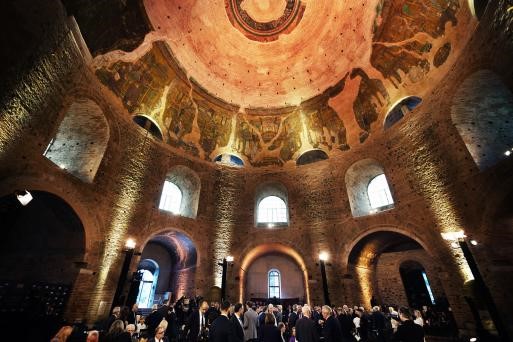
The emblematic monument of Thessaloniki, was constructed in the early 4th century AD, on the turning point between the pagan with the Christian world, probably as a temple for ancient cult worship or as a mausoleum for Constantine the Great (306-337). This circular, domed building measures 29.80 meters in height, 24.50 meters in diameter, its walls are 6.30 meters thick and can only be compared architecturally to the Pantheon in Rome. Not long after it was built and during the early years of the long-lived Byzantine Empire (330-1453), the Rotunda was turned into a Christian church with the addition of a sanctuary on its eastern side. The interior was decorated with Early Byzantine (4th- 6th c. AD) wall mosaics of unique artistry and beauty. It was Thessaloniki’s cathedral church (metropolis) between 1524 and 1591, the year in which it was converted to a mosque by the Ottoman conquerors. It remained in use as a mosque until the city’s liberation in 1912. Its dedication since that time to Saint George (Agios Georgios) is owing to the small neighboring church of this name. The mosaic decoration of the Rotunda is a masterpiece of Late Antique art.
Text source: http://galeriuspalace.culture.gr/en/monuments/rotonta/
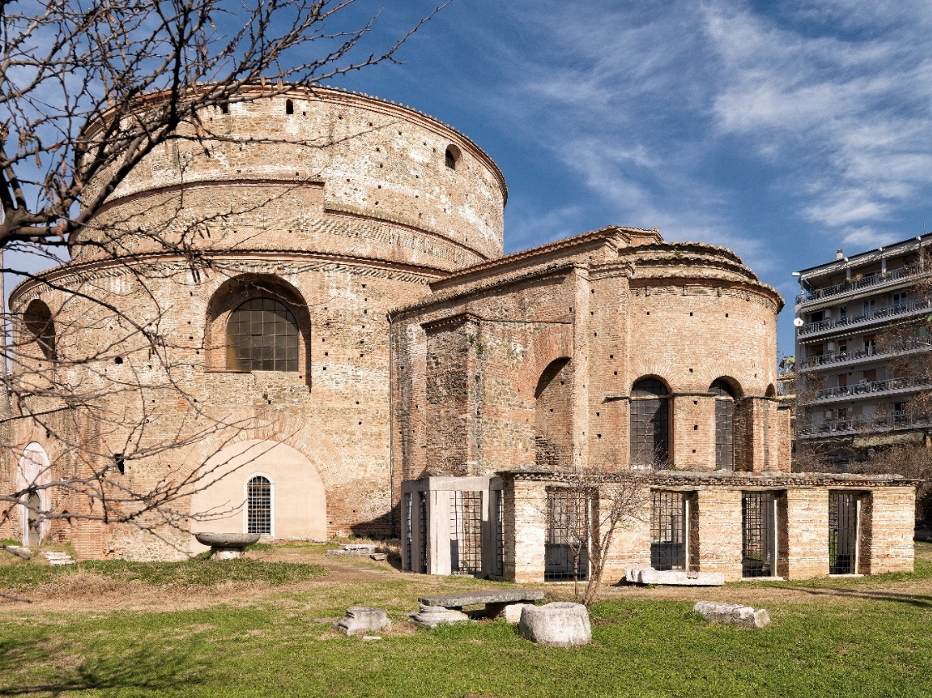
Photo credits: Ephorate of Antiquities of Thessaloniki City.
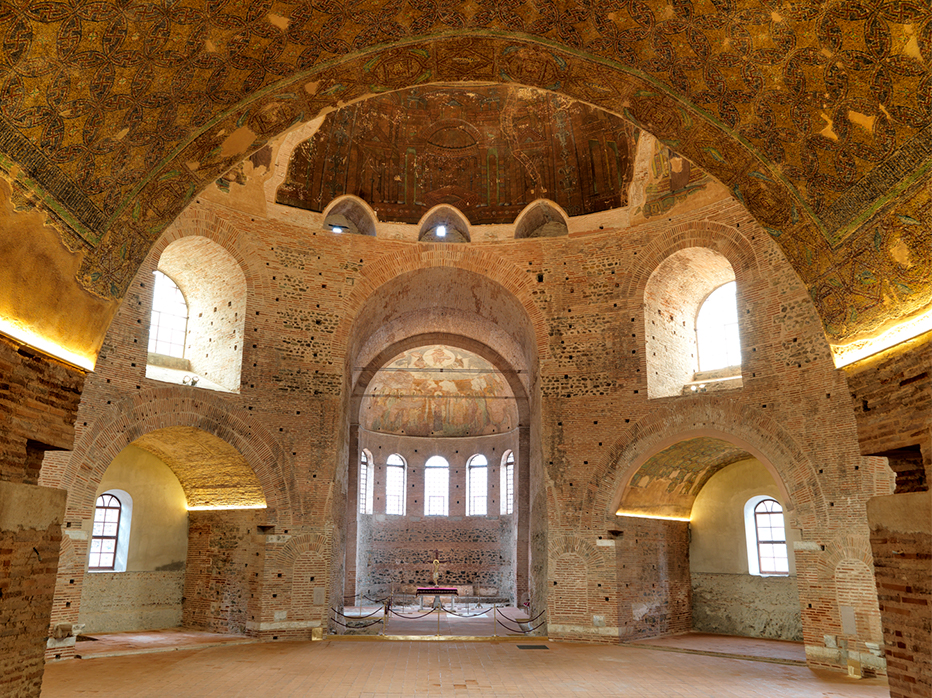
Photo credits: Studio 8 Photos, Efi Panagoula.