Round Table Discussion 2024 | Press Release
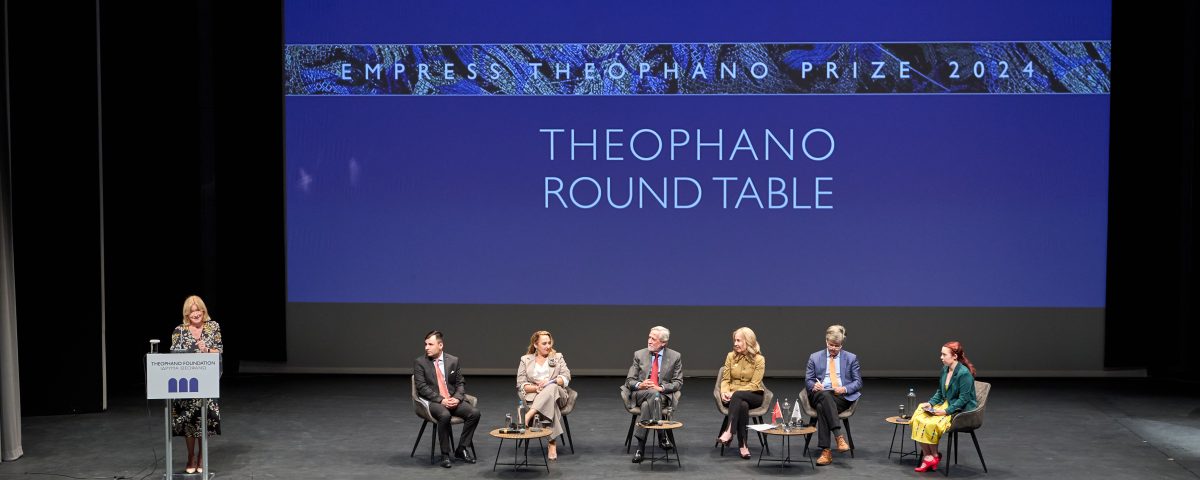
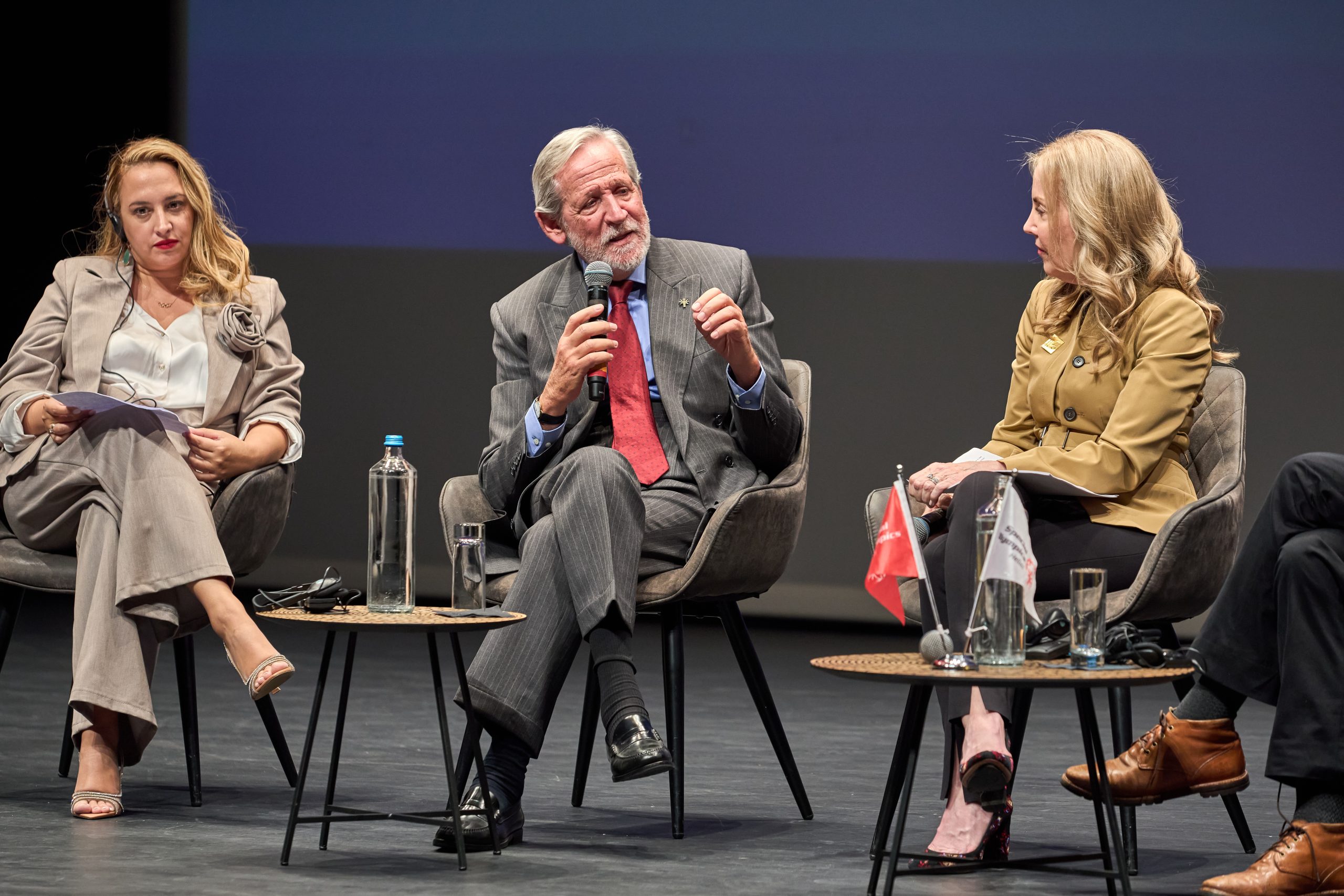
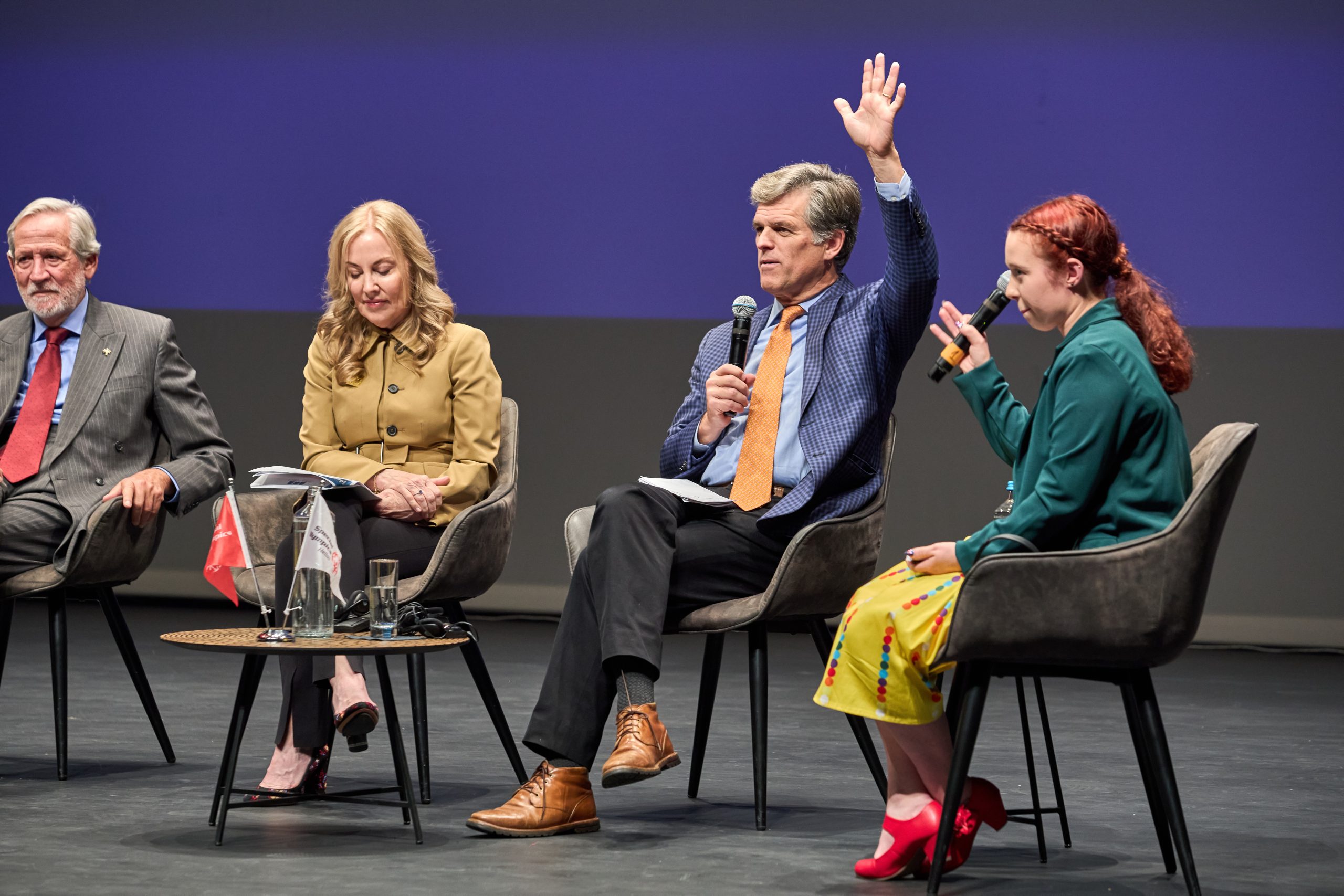
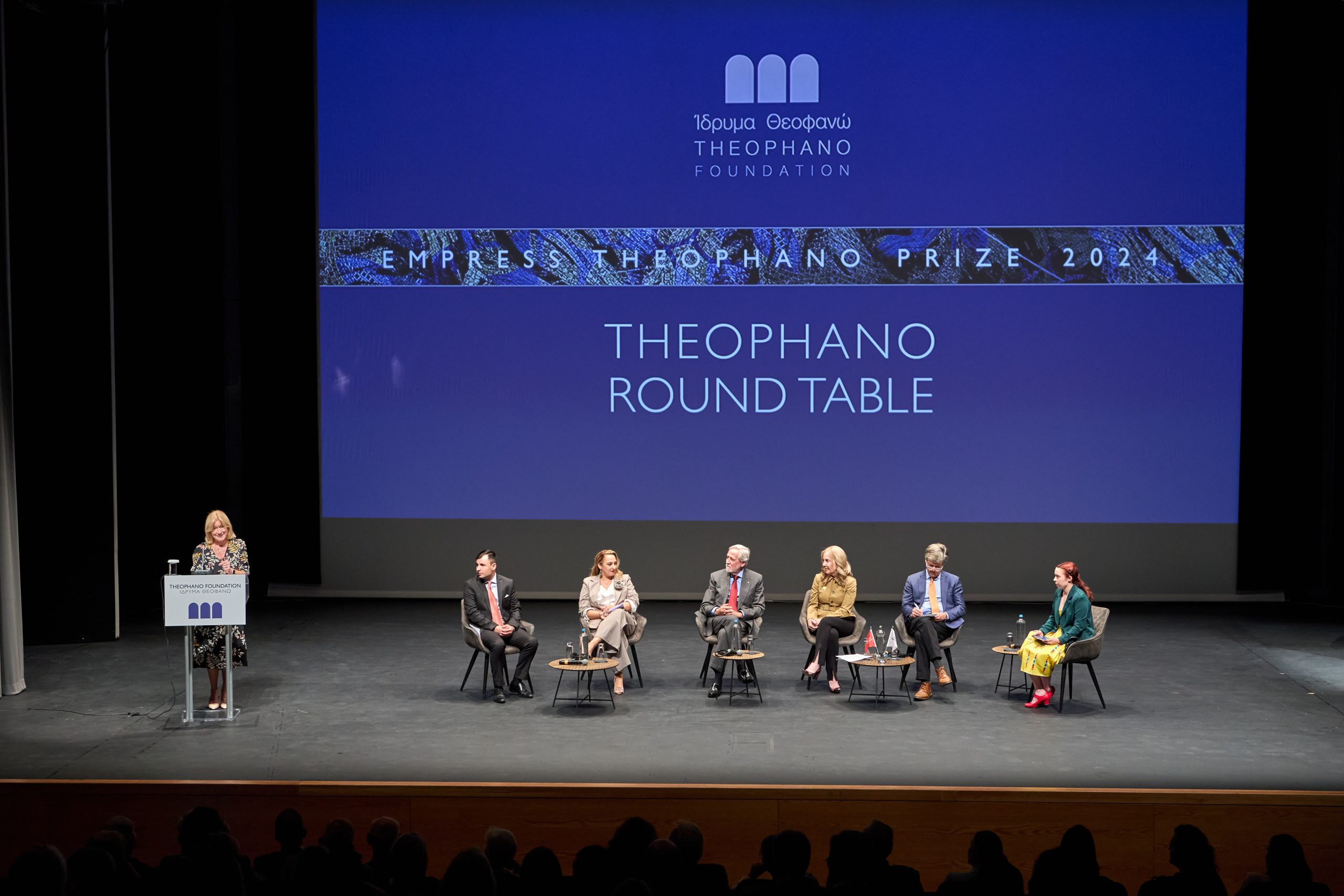
The power of sport as a means to promote inclusion and respect for diversity, but also the need for all governments to adopt policies for the effective inclusion of people with intellectual disabilities was highlighted in the Roundtable discussion entitled “Inclusive Sports Driving Human and Social Development for a Changing Europe”, organized by the Theophano Foundation at the Thessaloniki Concert Hall.
One day after the award of the Empress Theophano Prize to Special Olympics, leading representatives of the organization, international athletes and people close to the community of individuals with intellectual disabilities, explained through their own perspective the ways in which sport transforms people and society, as well as how inclusion strengthens families, communities and nations.
The keynote speaker of the event was Special Olympics International CEO Mary Davis, who focused on the role of sport and the struggle to integrate it into the educational process. “We have everyday sport, but it is not recognized as part of educational activity. Sport is the gateway to understanding, to empathy. We can teach this through play and that’s why Special Olympics always start with sport, to have positive changes.”
Ms. Davis also referred to her attendance at the first G7 Ministerial Summit on Inclusion and Disability, during which she appealed to officials to increase funding for programs that promote social inclusion for people with intellectual and developmental disabilities, to support similar efforts in third countries and to assist in increasing the number of volunteers. “I left the Summit with the hope that it was an important step forward in the broader effort to institutionalize disability in international organizations. Although it was the first G7 meeting to focus exclusively on disability, I hope it will not be the last,” she said.
The very interesting discussion was moderated by Kiera Byland, athlete and Board Member of Special Olympics International, President of the World Congress of Athletes as a representative of Great Britain, who in her opening statement emphasized that the journey with Special Olympics has changed her life. “Our goal is to showcase the power of sport, promote inclusion, enhance human development and address the ongoing challenges facing our societies,” she said and thanked all those who assist in the effort to advocate for inclusion and human dignity.
Aristotle’s approach, who had opined that “to train the mind without training the heart, that is not education”, was elaborated by the President of Special Olympics International, Dr. Timothy Shriver. “We need to continue with engaging people and trying to open their hearts, not just their minds. This is a challenge for everyone. We need to challenge schools to offer heart lessons and we must not stop until we get it right. We are using sport to enable us to teach heart lessons,” he said.
Mr. Shriver made special reference to the Empress Theophano Award, which he described as innovative. “This award is way ahead of its time because it tells us that there is a new issue in the world: how to bridge our differences. Governments want to do good, but they don’t, because they don’t recognize that this is the problem of our time. People will always have differences, but they need to reduce hatred as a way of resolving them. We don’t manage differences in a healthy way and we can teach young people and adults how to do that,” he said.
Dr. Jacqueline Jodl, Global Youth & Education Program Manager of Special Olympics International pointed out that many governments cannot clearly define inclusion, which needs to be taught. “The first lesson we have learned is that despite the ambiguity in the official definition, young people see it the same way and we realize that we have more similarities than differences. Young people know what it’s like to belong, to be associated with a group. And the second lesson we learned is that young people and teachers are clear about their desire to learn how inclusion happens. We need to teach inclusion and we have a very simple framework for teaching it: we just need to understand that everyone deserves dignity, everyone should know empathy and respect. And teaching young people to resist exclusion and practices that put barriers to inclusion, then we are taking a very important step,” she said. She stressed that changes need to be made in education systems, noting that understanding and bridging crosses over to other differences, which have to do with gender, race or culture.
The need to finally implement the declaration adopted by the UN for the protection of people with disabilities was stressed by Dionysios Kodellas, Ambassador (retired) and President of Special Olympics Hellas (Greece). “Decades later we see that its content has not been implemented. The European Union is obliged to develop a strategic plan for the implementation of the declaration and this is the role of Special Olympics”, he mentioned. Mr. Kodellas highlighted that it is active citizens who motivate a government to implement appropriate policies, and that the organization promotes synergies with the State so that even more people get involved in sports and get out into the community. He also mentioned that Special Olympics Hellas signed an agreement with the Ministry of Education for free access to all levels of education in order to train teachers and students by the philosophy of the organization.
Gilmour Borg, Athlete Leader of Special Olympics Malta, offered a different perspective to the panel by testifying his own personal life experience. “Before I joined I was bullied, I felt lonely, I had no purpose in life. I was in the dark. Special Olympics saved my life. They were the light for me when I was only seeing darkness. Now I have been voted into local government and am an elected member of the community,” he described, adding that it is important to hear the stories of these people to break taboos. He stressed that mixed sports programs should be promoted more, and that a platform should be created so that the voices of people with disabilities can be heard in other fields, such as the arts.
Her own participation at the Special Olympics was described by Olympic Rhythmic Gymnastics Champion and International Judge of Special Olympics, Klelia Pantazi, who first came into contact with the organization in 2011 as a volunteer for the World Championships in Athens. “I was shocked and enchanted by the athletes who were ready to give their best on the mat,” she said. Since then, she joined the international judges who volunteered to adjust the federation’s scoring code and, along with her sister Annie, also an Olympic champion, choreographed all the new programs the athletes would perform for the next eight years. However, she described the inclusion of Special Olympics girls in the training sessions as a major achievement and called on sports clubs to do the same. Referring to the organization’s award, she thanked the organizers saying “you give us the will and strength to continue and you have given a platform and voice to our work.”
The discussion was closed by the President of the Advisory Committee of Theophano Foundation, Honorary President of the European Council, Herman Count Van Rompuy, who stressed that living within differences is another great challenge today with the rise of extremism. “We must fight against this new form of intolerance that is being born in our societies,” he said. He also referred to “educating the heart”, noting that the best way to open the heart is to meet other people and meeting people with intellectual disabilities can be a “game changer”. “Opening the hearts of leaders is something we should constantly strive for,” he added, while addressing the representatives of the Special Olympics, he said they deserve much more than this award, as their actions contribute to achieving peace.
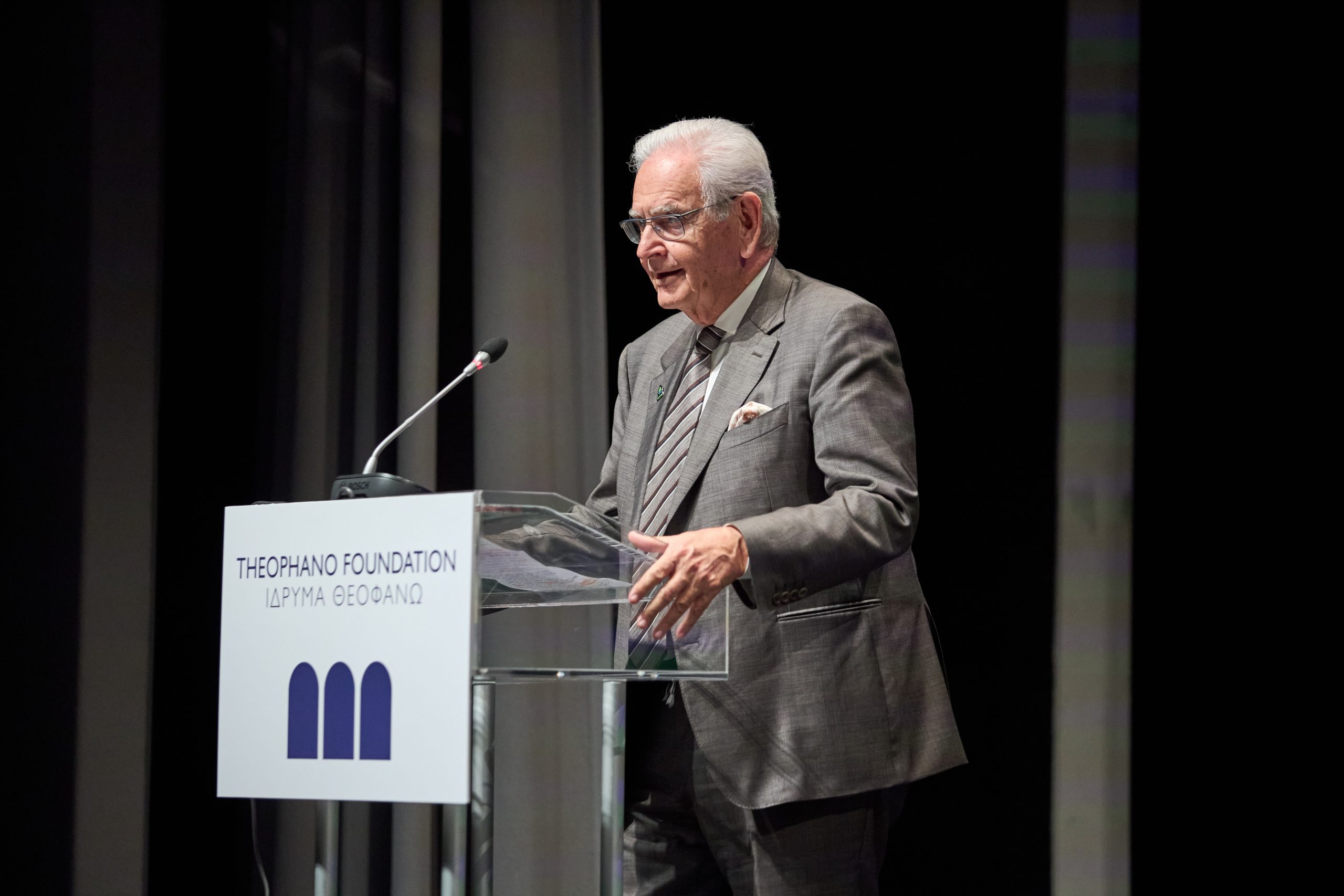
Nikos Efthymiadis, member of the Governing Council of the Theophano Foundation, also addressed the event, stressing that the Foundation is determined to develop the values served by the Special Olympics, which, in his words, “empower us and provide us with vision”.